For most of the year, Royal Poinciana Plaza does what it has done since 1957: open its courtyards to shoppers by day and go quiet by evening. That pattern is changing this fall, and not because more people are arriving on the island. The plaza itself now gives them somewhere to be after the stores lock up.
Palm Beach Island has spent the summer in its other register, the one Haute Living describes as quieter and more local, with the gala calendar dormant and the cultural institutions running reduced schedules. That ends on October 9, when Habitat for Humanity marks its fortieth anniversary with the Dream Builders' Ball, the first major ballroom night on this year's announced calendar. What's worth noticing isn't that the island is filling back in. It's where a chunk of that new activity is actually landing.
A Retail Center Built to Empty Out by Evening
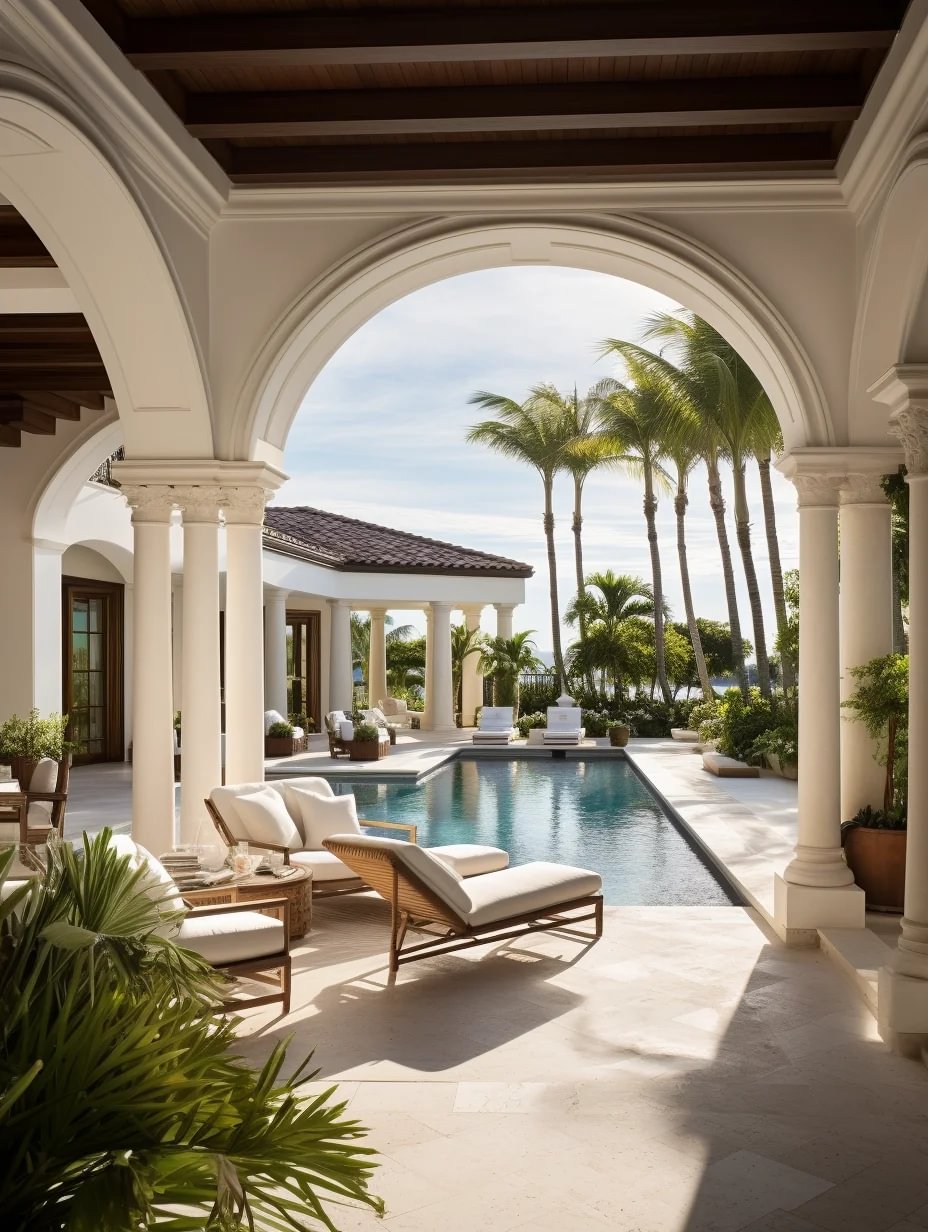
John Volk designed Royal Poinciana Plaza in 1957 for the Vanderbilts-and-Duponts set, a low Mediterranean-style complex of two courtyards, fountains, and covered walkways at the intersection of Cocoanut Row and Royal Poinciana Way. Its current owner, WS Development, still lists the same daytime luxury retail roster that made the plaza's reputation: Hermès, Cartier, Bottega Veneta, Oscar de la Renta, Saint Laurent. It was, by design, a shopping destination. Nobody built an evening around it.
Volk designed a second building nearby the following year, the Royal Poinciana Playhouse, a performance hall that has sat mostly dormant for decades. That building reopened this year as Glazer Hall, and it changes what the plaza is for.
Now It Has Somewhere to Be After Dinner
Glazer Hall seats four hundred behind a glass wall that looks straight onto the Intracoastal. It is, by most accounts, the island's first new nonprofit performing arts venue in more than sixty years. It debuted last spring with American Ballet Theatre and Renée Fleming, and this winter marks its first complete season on the island's calendar, not a preview run.
A short walk away, inside the same plaza, Tutto Mare opened in January 2026 as the island's only restaurant sitting directly on the Intracoastal. It's the vision of Gabby Karan de Felice, Donna Karan's daughter, and a sibling to the Hamptons favorite Tutto il Giorno. Between the two, Royal Poinciana Plaza now offers what it never used to: a reason to park the car once, eat dinner on the water, and walk to a four-hundred-seat hall for a show, all inside a complex that used to close when the boutiques did.
That's a different kind of evening than the island has historically had to offer within a single block. The private clubs and hotel ballrooms carry most of the season's calendar. This is a commercial plaza, built for retail, that has quietly added the other two pieces.
The Rest of the Island Is Filling In Too
The plaza isn't the only address with something new. A short list of what's opened elsewhere on the island this year:
- Coco's, inside the newly restored Vineta Hotel, from the hospitality group behind the Hotel du Cap in Antibes, Le Bristol Paris, and the Eden Rock in St. Barts, marking their first U.S. property. The hotel's bar, aptly named The Vineta Bar, sits in the same space that used to hold the Leopard Lounge.
- The Polo Room, co-owned by the Argentine polo player Nacho Figueras alongside restaurateur Thierry Beaud of Pistache, an equestrian-themed room that's already difficult to book on a given night.
- Emelina, an eighteen-seat Cuban tasting counter that opened in late January 2026, built around a single chef's-counter menu from Michelin-trained cooks.
- Midorie, which opened in March 2026 from Michelin-starred chef Álvaro Pérez Miranda, a minimalist Japanese room built around seasonal ingredients.
None of these are inside Royal Poinciana Plaza. They're spread across the island, which is closer to how Palm Beach has always absorbed new openings, one address at a time, rather than concentrated in a single complex. That's what makes the plaza's combination notable by contrast. It didn't add one restaurant to an already busy stretch. It added a restaurant and a performance hall to a building that had neither.
The Calendar That Tells You It's Actually Back
None of this activity means much without the season around it. Haute Living's read on the 2026-27 calendar has the private club dining rooms resuming full schedules through November, as families return from summers spent in the Hamptons, Europe, or Newport. The Palm Beach Food and Wine Festival in December is generally treated as the point the season fully arrives, not just resumes. From there, the gala calendar runs at its heaviest between January and March, and the season eases out as the National Polo Center in Wellington closes its matches in the spring.
That's the same rhythm the island has kept for years. What's different this time is that the rhythm now has a stop between the private clubs and the beach that didn't used to exist. A resident heading out for a Thursday in November has a version of the evening that wasn't available to them at the same address twelve months ago: dinner on the Intracoastal, then a seat inside a restored 1958 hall for a show, all inside walking distance of the boutiques where they might have run an errand that same afternoon.
What Changed, Specifically
It's tempting to describe a season's arrival in terms of population and calendars, and both are real. But the more useful fact for anyone who already lives here is narrower: one specific building complex, built almost seventy years ago to sell handbags and close by evening, now has a legitimate reason to keep people there after dark. That's not true of most of the island's other new openings this year, however good they are on their own terms. It's a change to what one address is for, not just what's being served there.
If you're already watching how the island's evening map is shifting this season, that's a conversation worth having directly. Renee Strack tracks these changes as part of following the market here, and welcomes a conversation about what's opening, where, and what it might mean for how the island actually gets used this winter.