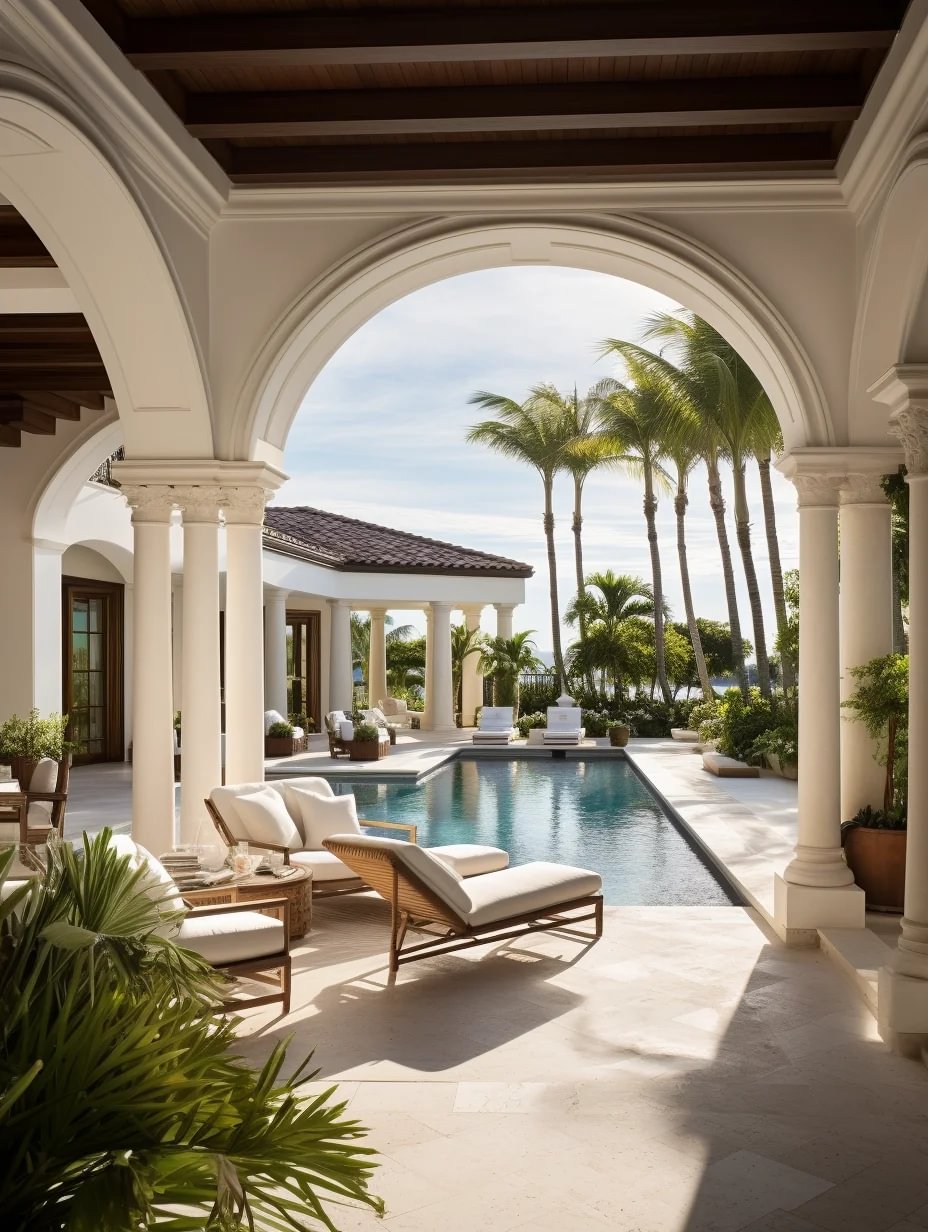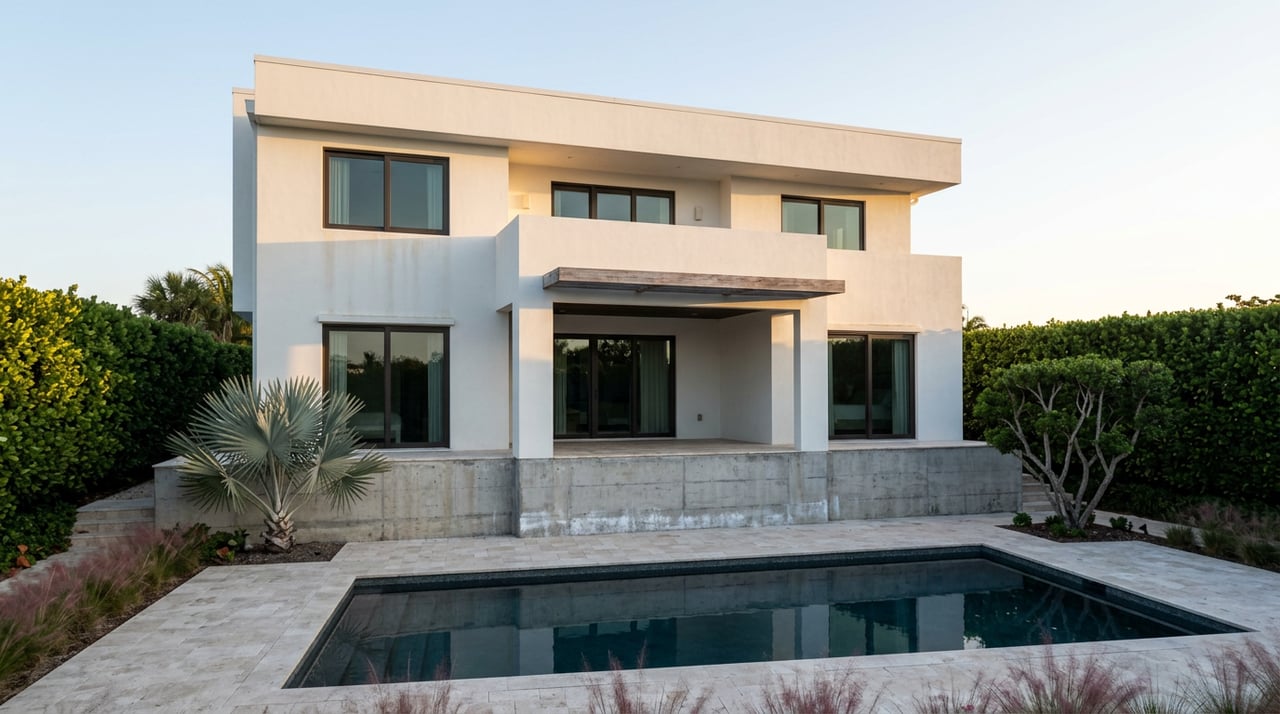
A 1970s concrete-block house on the ocean side of A1A and a three-bedroom unit in Toscana's south tower both get filed under the same heading: Highland Beach real estate. Beyond the zip code, they have almost nothing in common. One is being priced by what could replace it. The other is being priced by what it already is, plus how patient the buyer is willing to be.
That distinction matters more than usual this fall, because the rule governing how far a rebuilt house can sit toward the dune is still being written. The Town Commission's second reading on the Coastal Construction Control Line ordinance is scheduled for October 20, 2026, a month out from today. Anyone underwriting a teardown on an older Highland Beach lot right now is making an offer against a rulebook that has not been finalized.
Two products, one town
Highland Beach's real estate market data illustrates the split cleanly. Over the trailing 12 months, the town's single-family houses sold for a median of $6,725,000, a figure built from just 12 sales, since fewer than five houses closed in August 2026 or over the trailing three months. Condos and townhouses moved on a much shorter clock: their median sale price was $1,130,000 in August 2026 alone, based on 7 closings.
| Single-family houses | Condos & townhouses | |
|---|---|---|
| Median sale price | $6,725,000 | $1,130,000 |
| Period covered | Trailing 12 months | August 2026 |
| Sales counted | 12 | 7 |
That is not a luxury-versus-affordable gap. It is a land-versus-structure gap. A house that closes near $6.7 million is rarely being valued for its 1970s kitchen. It is being valued for the lot underneath it and what a buyer could build there. A condo that closes near $1.1 million is being valued for the building it sits in: its reserves, its amenities, its board, its age.
Town-wide figures for early 2026 reinforce how thin this market runs. Active inventory sat around 185 homes, up 21.8 percent year over year, with a sale-to-list ratio near 90 percent and days on market running 118 to 133 days. That is a market where well-prepared buyers can negotiate, but it is not a market flooded with comparable product. On a barrier island this narrow, it never will be.
Where the land-value tier actually sits
Highland Beach was incorporated in 1949 and covers 1.1 square miles, more than half of it water. A single road, A1A, runs the length of the town and connects Boca Raton to Delray Beach. There is no second route in or out, no traffic light, and no commercial strip. The only hotel is the Delray Sands Resort. Every lot that exists today is close to every lot that will ever exist.
That scarcity is what puts Byrd Beach, Ocean Place Estates, and Bel Lido Isle at the top of the land-value tier. Byrd Beach carries a median listing price near $6 million. Ocean Place Estates is a collection of just 11 custom homes priced from $6 million to more than $15 million. Bel Lido, on the Intracoastal side, holds 71 waterfront homes ranging from $3 million to $12 million, and it draws a different buyer than the oceanfront addresses: boaters, not just beach walkers, since nearly every lot on Bel Lido Isle carries dockage. A newer entrant, the six-townhouse enclave at 3621 South Ocean, prices from $5 million to more than $15 million, showing that even attached product commands estate-level numbers when the land under it is this constrained.
None of these addresses are selling square footage. They are selling one of a fixed number of positions on a barrier island that cannot widen.
What the condo towers are actually pricing
Toscana is the largest ultra-luxury condo community in town: three oceanfront towers, Toscana North with 143 units across 17 floors, Toscana West with 118 units across 16 floors, and Toscana South with 159 units across 18 floors, for 420 residences total. Villa Nova sits at the opposite end of the scale, a 15-story building holding only 24 residences, completed in 1987. Both buildings are trading in the same town, but they are trading on different logic: Toscana on volume and amenity depth, Villa Nova on scarcity and a fixed unit count that will never grow.
The days-on-market pattern inside this segment tells its own story. In August 2026, condos and townhouses still actively listed carried a median of 101 days on market. The ones that actually closed that month had taken a median of 161 days to get there. The homes sitting on the market right now simply haven't hit that wall yet. A seller pricing a Highland Beach condo today should expect the real clock to run closer to five months than three, regardless of what the current listing sheet suggests.
Age shows up in these buildings in practical ways, too. In March 2026, the Planning Board reviewed an application from Seagate of Highland Beach Condominiums for a new 472-square-foot fire pump structure at 3224 South Ocean Boulevard, the kind of capital project that aging towers take on as part of ordinary infrastructure upkeep. Buyers evaluating an older building should be asking about projects like this the same way they'd ask about reserves or a recent structural inspection. It's not a red flag. It's a maintenance cycle that comes with any coastal high-rise built decades ago.
The ordinance still being written
Highland Beach's existing zoning code technically prohibits construction east of the Coastal Construction Control Line, even though that construction is already permitted and regulated by the Florida Department of Environmental Protection. The town's proposed fix, Ordinance No. 2026-003, is meant to close that gap and align local code with the state permitting process that already governs oceanfront rebuilds.
The path there hasn't been smooth. At the ordinance's first reading, staff had included language tied to Design Flood Elevation and lowest living floor requirements. Residents raised concerns, and on September 1, 2026, the Town Commission directed that language be removed, returning the proposal closer to what the Planning Board had originally recommended. Floor elevation and construction near the dune will now be handled in a separate ordinance later, with more public input built in. The second reading of the narrower CCCL fix continues at the Town Commission's October 20, 2026 meeting.
For a buyer or builder pricing a rebuild on an oceanfront lot right now, the practical takeaway is patience. The rule that clarifies how CCCL construction fits into town code is not final. The separate rule on floor elevation, which has more direct bearing on construction cost and design, hasn't even reached a public draft yet. Underwriting a project against today's code without confirming what changes on October 20 is underwriting against an incomplete picture.
What this means if you're pricing a rebuild
Much of Highland Beach's single-family stock dates from the 1960s through the 1990s, built well before current wind and flood standards. That gap between what exists and what current code allows is exactly what makes the land-value math work for a rebuild. But the construction itself carries real requirements: flood-zone elevation and wind-borne debris provisions of the Florida Building Code, alongside state permitting for oceanfront parcels seaward of the CCCL, as E.G. Homes Florida notes. The town runs a small, detail-oriented review process, which is part of why local builders active in Highland Beach describe the older housing stock as carrying more value in the dirt than in the structure sitting on it.
None of this changes the appeal of the town. It changes the due diligence. A house priced at land value only pencils out if you know, with some confidence, what you're allowed to build there and by when.
A short FAQ
Does every oceanfront lot in Highland Beach need a state CCCL permit? Work seaward of the state's Coastal Construction Control Line generally requires an FDEP permit.
What actually changes on October 20, 2026? The Town Commission continues the second reading of Ordinance No. 2026-003, which aligns town code with the fact that CCCL construction is already regulated by the state. Design Flood Elevation and lowest living floor rules were pulled from this version and will come back later as a separate ordinance with its own public process.
What should condo buyers ask about? They should ask about the building's own capital plan, reserve funding, and any pending projects, the kind of detail that shows up in something as routine as a fire pump replacement application.
Highland Beach rewards buyers and sellers who do the math on land, structure, and timing separately rather than trusting a single blended number. If you're weighing a rebuild, a renovation, or a purchase in one of the town's oceanfront towers, Renee Strack can walk through what the current ordinance language means for your specific lot and timeline. Let's Connect.
This article is general information, not legal, tax or financial advice. Consult a qualified professional about your situation.